
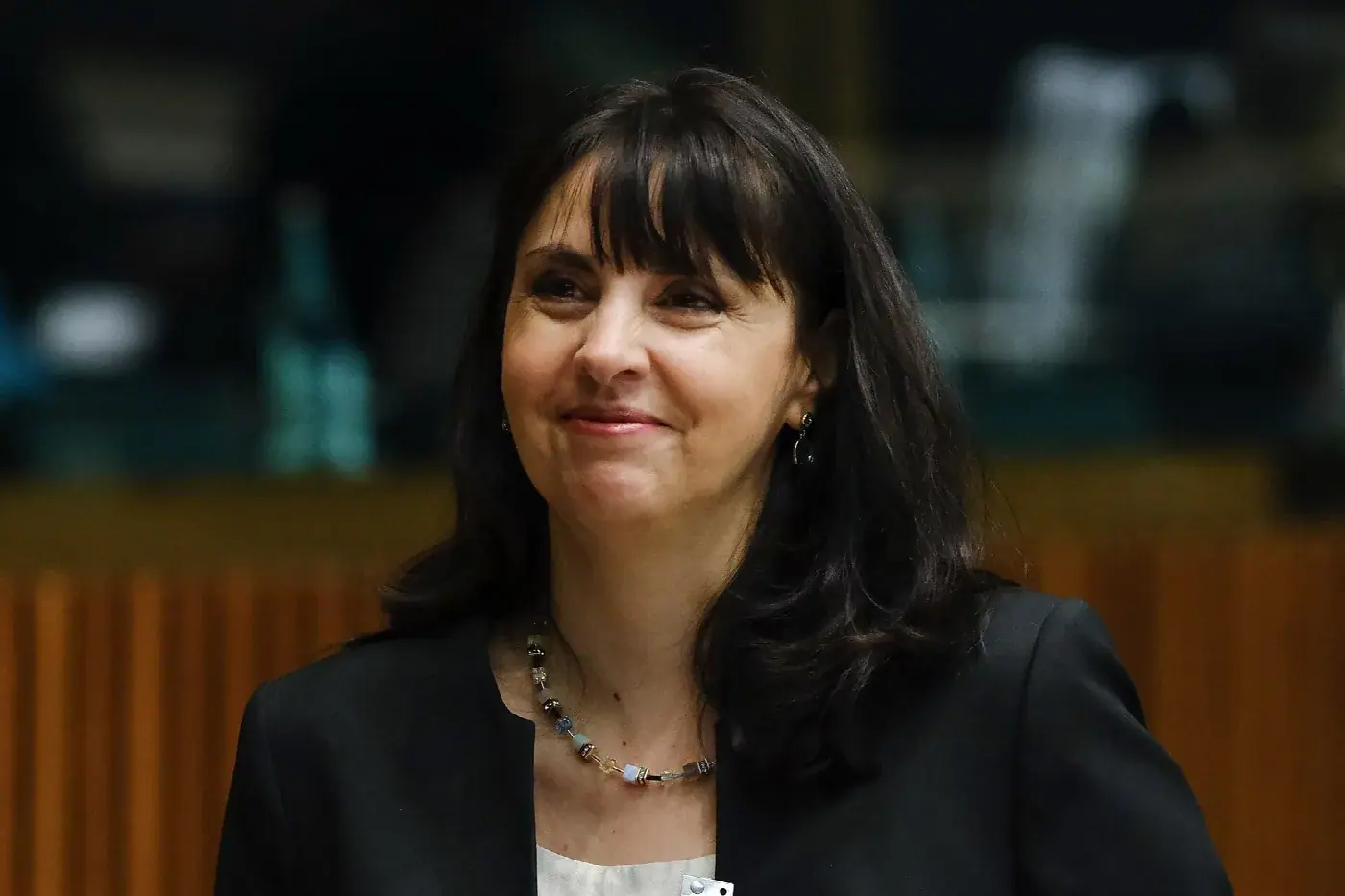
The budget and finance committee in parliament backed the 2027 state social security budget at first reading. The draft won 12 votes in favour, 2 against and 9 abstentions. Labour and social policy minister Natalia Efremova presented it at the meeting.
The average pension in 2027 will be €587.70, 8% more than in 2026. From 1 July, pensions granted before the end of 2026 will go up by 7–8% under the Swiss rule. The maximum pension, the social old-age pension and its supplements will rise by the same rate. The minimum pension for a full work record at retirement age will be €374.62.
On Friday, 6 November, the Finance Ministry published the draft bill on its website.
The budget sets aside €14.668bn for pensions and supplements. That is €1.164bn (8.6%) more than in the 2026 budget. The sum equals 10.4% of forecast GDP, and the whole social security budget is €16.53bn. The supervisory board of the National Social Security Institute (NOI) approved the draft unanimously, NOI head Vesela Karaivanova said.
From 1 January 2027, the benefit for raising a child up to age 2 will rise from €398.81 to €450. The same rise applies to fathers or adoptive parents raising a child up to age 8. Benefits paid when a parent does not take leave for pregnancy and childbirth, for adopting a child up to age 5, or for raising a child up to age 2 will go up from 50% to 75% of the benefit paid during that leave.
The minimum daily unemployment benefit will be €13 instead of €9.21, and the maximum €60.76 instead of €54.78. The one-off payment when an insured person dies will rise from €276.10 to €660.
The minimum insurable income for the self-employed will be €660, and the maximum for all insured people €2,400. Minimum insurable incomes for the main economic sectors will rise by 6.4%.
From 1 January 2027, the rules for retiring from third-category (hazardous) jobs will also change. Women will retire at 62 years and 8 months with 37 years of service, and men at 64 years and 10 months with 40 years of service. In the Teachers' and Pension Fund, contribution rates stay the same and employers pay them in full. The fund's money is managed conservatively, in government securities and deposits at the Bulgarian National Bank. Karaivanova said the fund guarantees the pension supplement for teaching staff and the size of early-retirement pensions.
Efremova said the package raises payments, some of which have not changed in recent years, and protects all groups of insured people and pensioners. She expects the social security system to be more stable and to collect more from contributions. Higher payments will come from higher revenue, without raising contribution rates. The social security budget cannot include buffers because it is built on a different principle, she said. Buffers and anti-crisis measures belong in the main state budget, the minister said.
Lyubomir Datsov of the Fiscal Council said Bulgaria's social services system is good and works at the level of European ones. But the old problems remain in the Pensions Fund, he said, and the biggest in the long run is the make-up of the population and its ageing. Without a political decision to develop the second pillar of the pension system, there is no way to pay pensions normally in future, he said.
Employers' groups are divided. Stanislav Popdonchev of the Bulgarian Industrial Association (BSK) said the association backs the draft in principle. But he pressed the government to keep the contribution burden predictable and to draw a clear line between insurance protection and measures of state, social and demographic policy. He also called for a full road map for developing the pension system.
The Association of Industrial Capital in Bulgaria (AIKB) abstained. Executive director Dobrin Ivanov said reform of the pension system is overdue. He said social payments should move out of the system, and the Swiss rule should be revised so that it only covers inflation, with bigger rises going only to people in need. AIKB also backs reforms of the medical expert commissions (TELK and NELK) and the disability pension system.
Boryana Abadzhieva of the Bulgarian Chamber of Commerce and Industry (BTPP) said the chamber backs the draft in principle. She disagrees with the administrative rise in minimum insurance thresholds and with keeping the rule that employers pay the first two days of sick leave. Boyan Mitrakiev, executive director of the Confederation of Employers and Industrialists in Bulgaria (KRIB), said they back the budget in principle, especially the principle on the minimum wage. He said that with the change to the maximum insurance threshold, the IT industry loses its price advantage and can compete only on quality. Asya Goneva of the Confederation of Independent Trade Unions in Bulgaria (KNSB) said the union firmly backs the draft and sees many strengths in it.
GERB-SDS will not back the budget. Vladislav Goranov said it brings no improvement in social security indicators, so the group has reservations. Rising labour costs create a cycle that will hurt the labour market and the economy, he said, and the budget has no buffers. Goranov said he does not understand why employers approve of civil servants starting to pay a social security contribution. He called it "macroeconomic nonsense" and said it only raises average incomes while nothing changes in the economy.
The Continuing the Change group will abstain, Asen Vasilev said, because the budget has no anti-crisis package. At second reading the group will back a bigger tax break for working parents.

Comments (0)
No comments yet.