
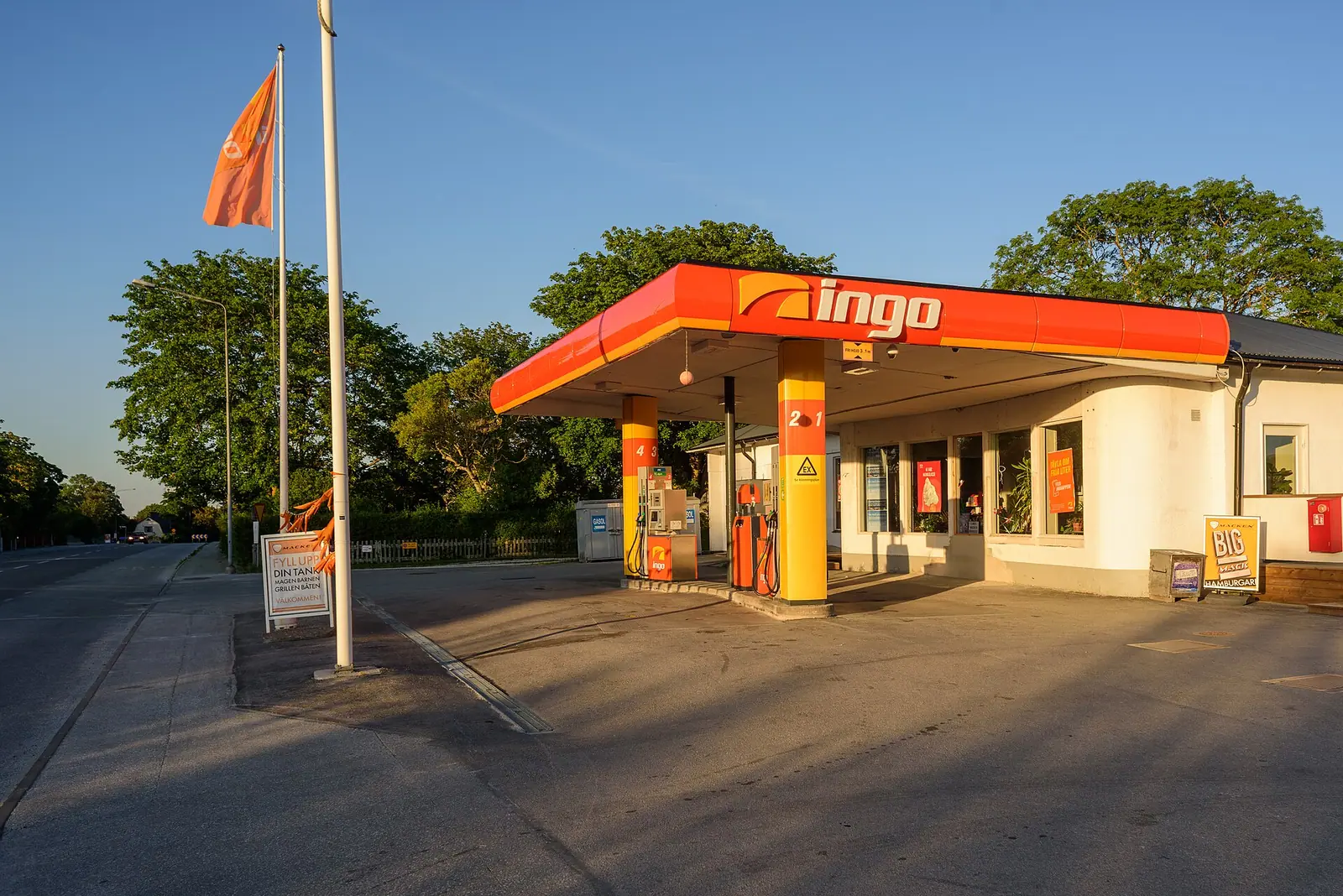
Seven of the ten countries doing the most to fight rising fuel prices are EU members. That's according to a report by the Organisation for Economic Co-operation and Development (OECD), cited by media. The wars in Ukraine and the Middle East have pushed up energy prices. So European governments are rolling out subsidies, tax breaks and rule changes. The goal is to help businesses and people.
Energy supplies in Europe have been shaken repeatedly since Russia's full-scale war on Ukraine began in February 2022.
EU countries are using different tools to ease the burden on people:
- Lithuania cut train ticket prices in half;
- Greece raised the gambling tax to fund welfare payments;
- Italy delayed shutting down its coal plants and sped up oil and gas projects on its own territory;
- the Netherlands boosted funding for a program offering free home energy-efficiency upgrades;
- Poland proposed higher taxes on the record profits of some fuel producers and traders.
Europe's reliance on energy imports remains a real problem. According to Eurostat, the EU statistics office, the bloc imports almost all the oil it burns and 85% of its natural gas. Imports cover 57% of the EU's energy needs overall, though much of its electricity is made at home from renewables and nuclear plants.
Frustration among Europeans is growing, as pump prices in some countries have already passed the equivalent of $12 a gallon. Expensive diesel alone costs people in the EU an extra 203 million euros ($231 million) a day, according to calculations by the European environmental group Transport & Environment.
"It's a bitter irony that the US is least exposed to a crisis it largely caused itself, while Europe's economy takes the hit again," said the group's analyst, Anthony Frogatt.
Some European governments are spending billions to soften the blow of the energy crisis and shield households and heavy fuel users among businesses.
EU leaders in Brussels have given member states temporary leeway to hand out state aid to households and to fuel-hungry sectors such as farming, transport and fishing. They've also relaxed public spending rules so countries can invest in supply security and cut their reliance on imported oil and gas.
"People and businesses already feel the pressure from pricier energy and pricier loans," European Commission president Ursula von der Leyen said in her annual State of the Union speech last week. She said the EU must double down on cheap, local, clean energy — from renewables, nuclear power and biomethane. That, she said, would boost independence and bring prices down for consumers.
France widens support for people and businesses
France keeps rolling out fresh help for people and heavy fuel users among businesses, expanding support week after week.
On Tuesday the French government announced a new 450-million-euro ($512 million) package to widen aid to citizens. More people will now qualify: those who commute over 30 km a day round-trip, or travel more than 8,000 km a year for work. The government says this makes 5.5 million workers eligible for a 100-euro ($113) payment to cover fuel costs through the end of the year.
The new package also extends fuel subsidies for farmers, fishermen and construction firms through year-end. And 5.8 million households will get their energy vouchers three months early. The vouchers, worth between 48 and 277 euros, will help cover heating bills this winter.
French president Emmanuel Macron has asked von der Leyen for a temporary easing of EU rules on fuel quality and composition — things like density and sulfur content — to let Europe produce more diesel and kerosene. The EU took a similar step during the Covid-19 pandemic, the AP notes.
In a letter to the European Commission seen by media, Macron warned that the world oil market could see "a sharp rise in prices" unless the Strait of Hormuz reopens to tankers and Saudi Arabia's East-West pipeline to the Red Sea is repaired.
Macron also asked the EU to raise the share of conventional biodiesel allowed in regular diesel fuel, from 7% to 10%.
In an interview with French TV, Macron said France will send troops, radar and defense systems to Saudi Arabia to protect energy sites there from attacks by Iran-backed Houthi fighters, who have seized new ground near Bab el-Mandeb — a key shipping route for world trade and oil supplies.
"We're positioning ourselves to protect this place, because until a few weeks ago more than 5 million barrels a day passed through it," Macron said, referring to exports from the Saudi port of Yanbu on the Red Sea, which links to the East-West pipeline.
Germany and Spain also cut fuel taxes
The German government will bring back a fuel tax cut from 1 October through year-end, dropping the price of petrol and diesel by 0.17 euros a liter. Officials say the move will cost the budget 2.5 billion euros.
German officials also said they're opening talks with the oil industry on capping fuel prices from 1 January. Neighboring Belgium and Luxembourg have run similar price caps for decades.
Spain's government has also extended its lower taxes on petrol and diesel, first brought in back in March as part of a 5-billion-euro ($5.7 billion) package.
The discount currently stands at 0.05 euros a liter. Under an automatic rule, it will rise to 0.20 euros a liter if annual fuel-price inflation tops 15%.
Spain has also extended fuel subsidies for transport firms, farmers, livestock breeders and fishermen.
Belgium argues over fuel duty
Belgium's ruling coalition still hasn't agreed on how to respond to costly fuel. The lead party, New Flemish Alliance, wants strict budget discipline, while its coalition partner, the Reformist Movement, wants fuel duty to drop automatically once prices hit a certain level.
New Flemish Alliance says cutting the duty would cost the budget about 200 million euros a month, putting at risk plans to save 10 billion euros by the end of the government's term.
The coalition partners also disagree over VAT rates. Over the past week, the price of diesel in Belgium topped 2.50 euros a liter, and local economists expect regular petrol to reach that level soon too.
Czechia brings back price cap and refinery tax
The Czech government says it will bring back a cap on retail fuel prices from 1 October and add a temporary tax on refineries. It's the second time this year Czechia has capped prices, after a similar cap ran from April to July.
Finance minister Alena Schillerová said her ministry will set the maximum allowed prices for petrol and diesel every day. The move follows record-high fuel prices across Europe, especially for diesel.
The average price of petrol and diesel at Czech pumps hit 44.21 crowns ($2.08) a liter in August, up from 34.49 crowns ($1.63) a year earlier, according to data from CCS. The government is also bringing in a temporary tax on refineries, which Schillerová says are profiting from higher fuel prices.
Bulgaria puts over 300 million euros toward high fuel prices
Bulgaria, too, has rolled out packages worth more than 300 million euros to tackle high fuel prices. These include scrapping the excise duty on LPG, targeted subsidies for public, school and medical transport, support for farmers, and a one-off 50-euro payment for low-income people and families. The government says the measures will directly benefit more than 550,000 people.
Scrapping the excise duty on LPG will run through the end of 2026, covering drivers of gas-powered cars and transport firms. Parliament's budget committee has approved, at first reading, a zero excise rate on natural gas and liquefied petroleum gas used as motor fuel from 1 October 2025 to 31 December 2026. The finance ministry puts the overall cost to the budget at 20 million euros, of which 17 million euros is for LPG. For now, there are no changes planned to excise duty on petrol and diesel, but the government says it may act further if price pressure builds.
The state also plans subsidies for key sectors — public, school and medical transport, with a focus on small and remote towns. In farming, of the 170 million euros in planned state aid, 100 million euros will go toward offsetting higher diesel fuel costs (about 0.44 euros a liter), to stop food prices from rising further.
The steps come as fuel keeps getting pricier. According to the Fuelio platform, by 20 September diesel had risen 3.72% to an average of 1.95 euros a liter, while 95-octane petrol rose 3.07% to 1.68 euros a liter. LPG and methane also climbed, by 6.15% and 6.87% respectively.
Eurostat data show that fuel and lubricant prices for personal vehicles in Bulgaria have risen 34.5% over the past year.


Коментари (0)
Все още няма коментари.