
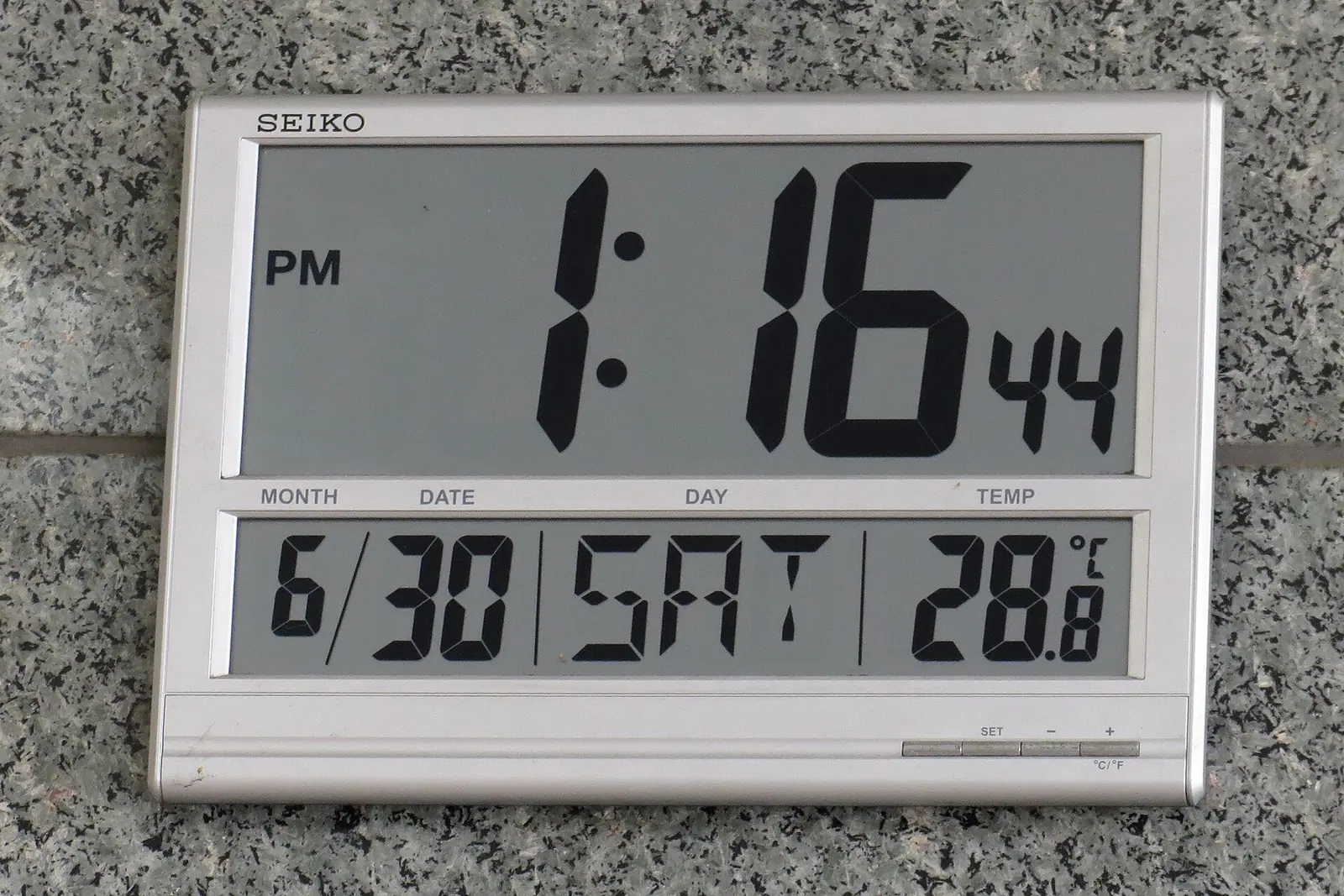
Clocks in Bulgaria go back one hour at 4:00 am tonight, returning to standard, or winter, time. People get an extra hour of sleep, and mornings get light earlier.
The European Commission has reopened talks on ending the twice-yearly clock change. A study began in February and should finish by the end of 2026.
It will gather more evidence on what a general end to the clock change would mean, and will serve as a basis for further talks. The study will compare the effects on the economy, society and the environment, depending on which standard time member states choose. It will look at an EU-wide end to the change and at options with partial harmonisation.
To end the change, the Council of the EU and the European Parliament must agree on the necessary law. European Newsroom, a platform of 23 European news agencies, says the reform has been stuck since parliament backed it, because several countries oppose it.
Under the current directive, in force since 2001, the EU moves to summer time on the last Sunday of March and back to standard, or winter, time on the last Sunday of October. The Council of the EU says changing the clocks in spring and autumn is older than the Union itself.
Clocks were first changed to save energy during the First World War, and many countries brought the practice back in the 1970s. In 1980, the EU adopted a directive to coordinate national practices so that the single market could work without obstacles.
In 2018, the Commission proposed ending the change, after a survey of nearly 4m people in what was then a 28-member bloc that still included the UK. Participants backed scrapping it. In the public consultation, 84% were against the clock change, and parliament approved the reform in 2019.
In the 2018 national-level consultation, more than 95% backed an end to the seasonal changes. In the same consultation, 51% were for permanent summer time, 38% for winter time, and 7% did not state a preference.
Dr Petya Terziivanova, head of the second psychiatric clinic at St Naum Hospital, told BTA that the effect on focus, mood and ability to work is usually short-lived and differs strictly from person to person. Some people describe adjusting with the words "I don't know what's wrong, but I don't feel well", she said.
She said that when people do not get enough sleep, their focus drops, they get distracted more easily and are less attentive in everyday tasks. Short-term mood changes are possible, such as irritability, mild low mood and anxiety. In the first days, some people report lower motivation, tiring more easily and a loss of energy, but these complaints usually pass within a few days.
The body clock depends directly on daylight and is tuned to long days in summer and short days in winter. The change therefore calls for quicker adjustment, usually within a few days. With summer time, people get up and go to bed an hour earlier, find it harder to fall asleep in the evening, sleep less and feel drowsy for a while during the day. The shift is hard for people with an evening chronotype.
With winter time, people get up and go to bed an hour later, wake earlier and have less time left for evening activities. It is harder for people with a morning chronotype. People with sleep disorders, children and teenagers, and people with chronic physical and mental illnesses are more sensitive to the change.
From the point of view of chronobiology, permanent winter time looks better than permanent summer time, because the seasonal changes in light fit the body clock more closely. Dr Terziivanova said the evidence on long-term health effects is limited and mixed, so conclusions should be cautious.




Comments (0)
No comments yet.