
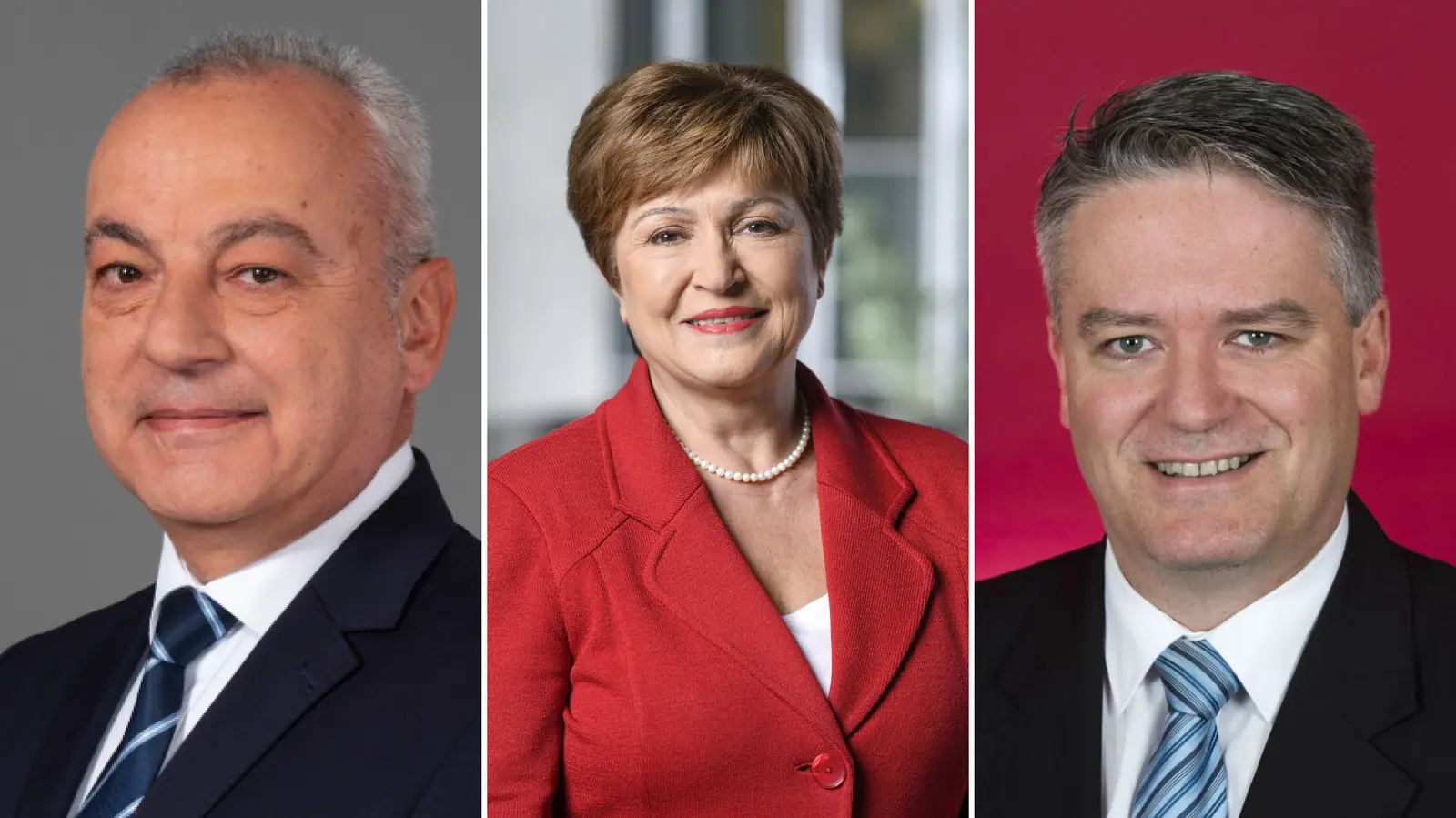
Deputy Prime Minister and Minister of Finance Galab Donev emphasized that banks must have sufficient loss-absorption capacity and adequate capitalization to protect the EU banking sector from financial shocks. During a working lunch with ministers in Dublin, Ireland, the competitiveness of the banking sector was discussed, with Bulgaria expressing support for simplifying supervisory and regulatory reporting. However, the overall regulatory burden remains a structural challenge, which is why the Bulgarian side is encouraging efforts to maintain a proportionate and consistent regulatory framework.
The future of financial innovation in Europe was discussed at the meeting of the EU Economic and Financial Affairs Council (ECOFIN). Deputy Minister of Finance Metodi Metodiev also participated in the meeting. Minister Donev emphasized that for Bulgaria, it is essential that scientific and computational capacity becomes more widely accessible to administrations and businesses. He also expressed satisfaction with a brief meeting held with Kristalina Georgieva, Managing Director of the International Monetary Fund (IMF), who is participating in the Council's working session.
The impact of artificial intelligence on economies and society in Europe was a central theme, addressed through a presentation by Kristalina Georgieva. According to an IMF report prepared for the ECOFIN meeting, the technology could lead to a productivity increase of about 1 percent within five years. However, as quoted by the media, the Fund warns of serious risks, including the overloading of power grids, increasing dependence on foreign technologies, and deepening inequality. The latter could occur if the benefits and costs of AI are distributed unevenly among countries, regions, and workers, unless governments incentivize economic integration.
Eurogroup members also analyzed the challenges to growth and competitiveness within the monetary union. As the population ages, employment will no longer be the primary driver of growth as it was over the last decade, making productivity the only sustainable factor for development in the eurozone. Europe enters this period with significant advantages: a single market of 450 million people, highly educated professionals, significant savings, and world-renowned scientific research. The challenge for the union is to transform these assets into innovation, higher competitiveness, and faster productivity growth.
As part of the Deputy Prime Minister's international engagements, a meeting was held with Mathias Cormann, Secretary-General of the Organisation for Economic Co-operation and Development (OECD). Donev confirmed that Bulgaria's accession to the OECD remains a strategic priority and assured him that the government is working in close partnership with the Organisation to successfully complete the remaining reviews in its committees. During the conversation, Cormann reported that Bulgaria is already in the final technical phase of the accession process.
The decisions of the EU Council regarding the banking sector and technological innovations will determine the economic stability and development conditions for businesses in the Burgas region.
The Minister's bilateral talks also included a meeting with the President of the European Bank for Reconstruction and Development (EBRD), Odile Renaud-Basso. Before her, Galab Donev presented the priorities of his management program and the efforts to maintain financial sustainability and stabilize public finances in the medium term. Opportunities for further cooperation were also discussed, including the potential for utilizing public-private partnerships.





Коментари (0)
Все още няма коментари.