

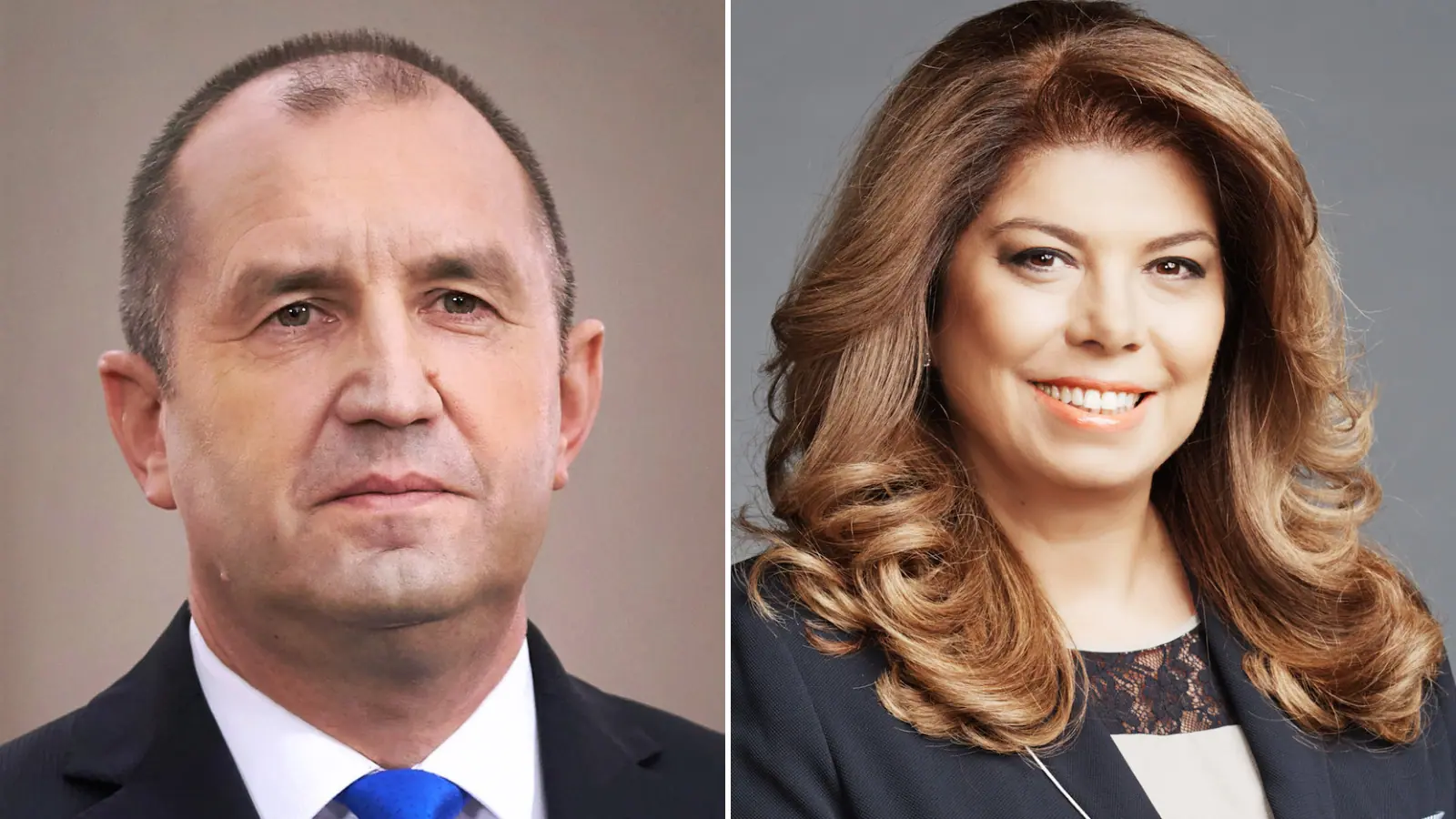
Bulgaria's presidential election will go to a runoff on 1 November between President Iliana Iotova and former caretaker prime minister Andrey Gyurov, a projection by the Myara agency shows after the first round on Sunday, 25 October.
On 23 October, two days before the vote, the Trend agency said a runoff between the two was certain. At that time, 47% of Bulgarian adults said they would vote. The agency said actual turnout usually ends up lower than what people say.
More on this story: Trend poll: run-off between Yotova and Gyurov is certain, 47% say they will vote
Iotova leads with 35%, and Gyurov is second with 31.9%. No one won the majority needed, as a candidate must get more than 50% to be elected. Turnout on election night was 22.2%. About 6.5m Bulgarians were eligible to vote.
Iotova is a former journalist. Gyurov, 50, is backed by the reformist, liberal-conservative opposition camp. Kostadin Kostadinov, the candidate of the nationalist, pro-Russian Vazrazhdane party, is third. In the European Parliament, Vazrazhdane sits in the same political group as Germany's Alternative for Germany.
The two did not hold a debate before the first round, although Gyurov called on Iotova to take part in one. On election night, he said the head of state must be active and act as a check on the concentration of power. The opposition believes the president and the prime minister should not come from the same political camp.
Gyurov has a pro-Western outlook. Iotova has repeatedly called for a negotiated end to the war that Russia began against Ukraine with its full-scale invasion in February 2022. Prime minister Rumen Radev opposes a tribunal for the war, because he says Russia has not been defeated. He recently refused to let Bulgaria join a new EU financial aid package for Ukraine.
The president is elected directly for five years and has fairly few powers. The president is commander-in-chief of the armed forces and can send a law back to parliament with a veto. But unlike the French president, the Bulgarian president cannot dismiss the prime minister.




Comments (0)
No comments yet.