
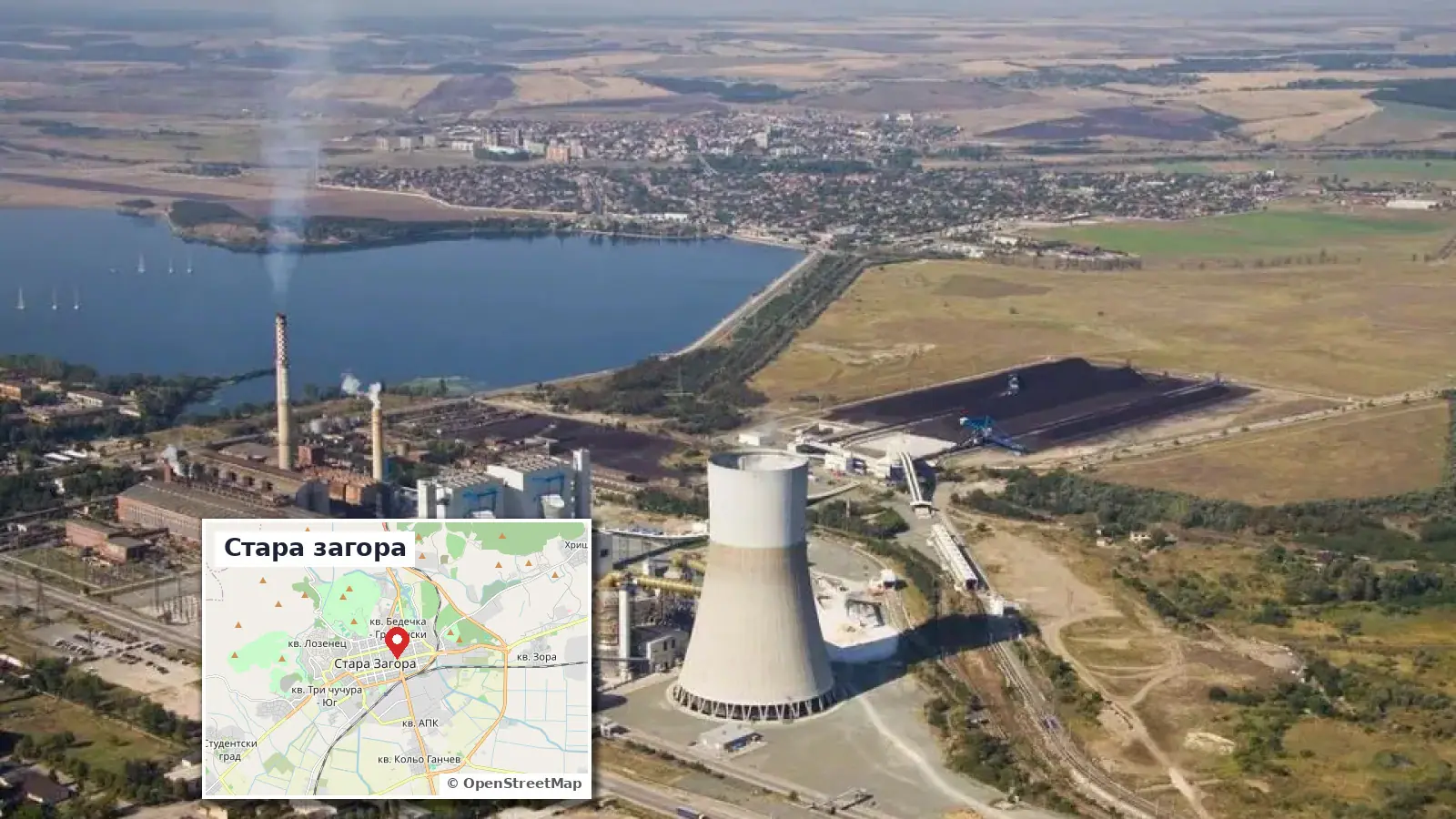
Bulgaria must adopt a single national position on reviewing the EU Emissions Trading System, the KNSB unions at the Maritsa East complex say. They make the call in an appeal to President Iliana Yotova and Prime Minister Rumen Radev, which BTA received.
The unions want a major review of how carbon permit prices are set. They also want special mechanisms and exemptions for coal plants needed for energy security, and protection of the right of EU member states to use their own energy resources according to national conditions. They say Bulgaria should also agree its position with other EU countries that have an interest.
They expect the president to back a national consensus. The prime minister should order work on a position immediately, with state institutions, energy firms, unions, employers and experts taking part. The Ministry of Energy should prepare a justification with figures on the costs, risks and consequences of the different scenarios.
The unions say a tonne of carbon emissions costs €88.36, about 17.2% more than at the start of the year. They give this as one reason for a review.
KNSB says Maritsa East provides jobs and a living for the region. It says the complex has the production capacity to step in during breakdowns, when output from renewable sources is low and when energy markets are in crisis. Local lignite cuts reliance on imported fuel, while high permit prices make it harder for coal plants to work, KNSB says. The appeal says the pace of cutting coal power must match the availability of replacement capacity that guarantees a secure electricity supply.
Miners at Mini Maritsa East oppose the structural reforms and restructuring in the energy sector that the Ministry of Energy has proposed. Biser Binev, chair of the Podkrepa company union organisation, and Georgi Gospodinov, chair of the KNSB company union organisation, said this at a news conference at the BTA National Press Club in Stara Zagora in early September.
The unions also cite Eurostat data. Real gross domestic product in the South-East region fell 20.5% in 2019–2024, while the EU economy grew 5.6% over the same period. The unions say the gap shows the effects of the transition on regions that depend on coal power.




Comments (0)
No comments yet.